“How do i maintain training at home?” A Trainer’s playbook
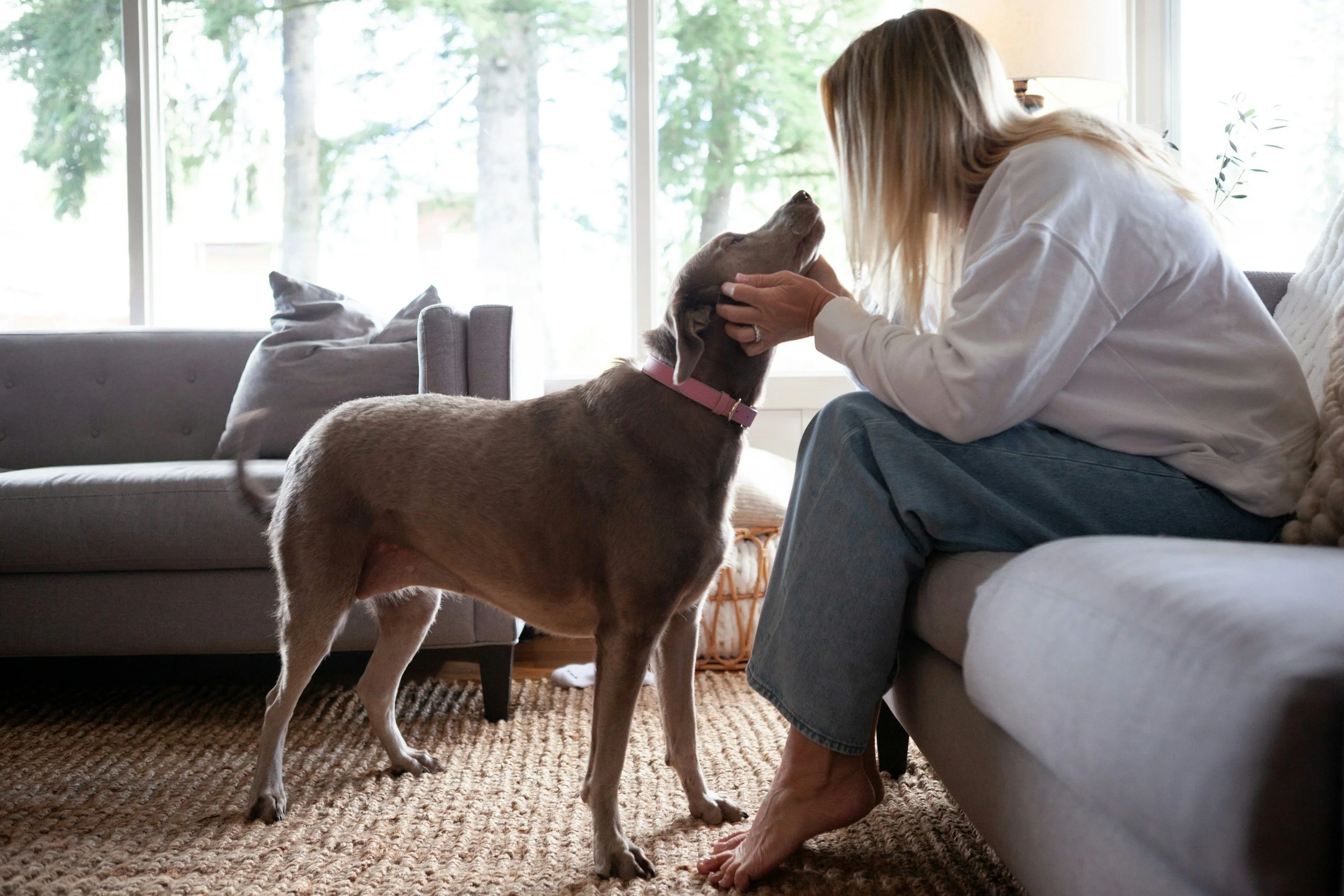
Maintaining your improved dog’s training at home.
With over 10 years of training dogs (four years doing it professionally through my business, Absolute Angel Dog Training) there's one question I hear more than almost any other: "Okay, the program's over… now how do I keep this going at home?"
It's the right question to ask. And honestly, it's the reason I run my business the way I do.
Why I Train the Way I Do
I work mostly with owners on puppy training and basic manners and obedience, and I deliberately choose private, one-on-one lessons over board-and-train programs. The reason is simple: I want you there, live, watching your dog learn, asking me questions in the moment, getting your own hands on the leash, and seeing exactly how and why something works, or doesn’t work necessarily for your dog.
When you ship a dog off to be trained somewhere else, you may get a trained dog back but you miss the education. And the education is the part that lasts. A dog who comes home from a board-and-train can backslide fast if the humans don't know how to hold the line. The whole point of being in the room with me is that when our program ends, you are the trainer now. That's what makes maintenance at home actually stick.
Why Training Slips at Home
In my experience, at-home training tends to fall apart for a few very predictable reasons. The good news is that once you can name them, you can get ahead of them.
Inconsistency and mixed signals. This is the big one. One family member uses one hand signal, someone else uses a different one or the wrong one entirely. Your dog isn't being stubborn; they're confused. Everyone in the household needs to be speaking the same language with the same cues and the same hand signals.
No follow-through. Most people don't fail because they're doing it wrong. They fail because they stop doing it. They don't carve out a little time each day to practice, and they never bump up the difficulty, so the dog plateaus.
Pushing too fast. This is the one I see constantly. An owner gets a solid stay inside the living room and then immediately expects that same stay to hold when another dog comes running by at the park. That's setting your dog up to fail. There's a saying in dog training I live by: you train for the moment, not in the moment. You build the skill in calm, low-distraction settings first, then gradually add distractions, so that when the real moment arrives your dog is ready for it instead of overwhelmed by it.
Life gets in the way. A lot of my clients work, or have small kids, and they simply feel like they don't have time. I get it. Which is exactly why my whole home-maintenance system is built to fit into a real, busy life.
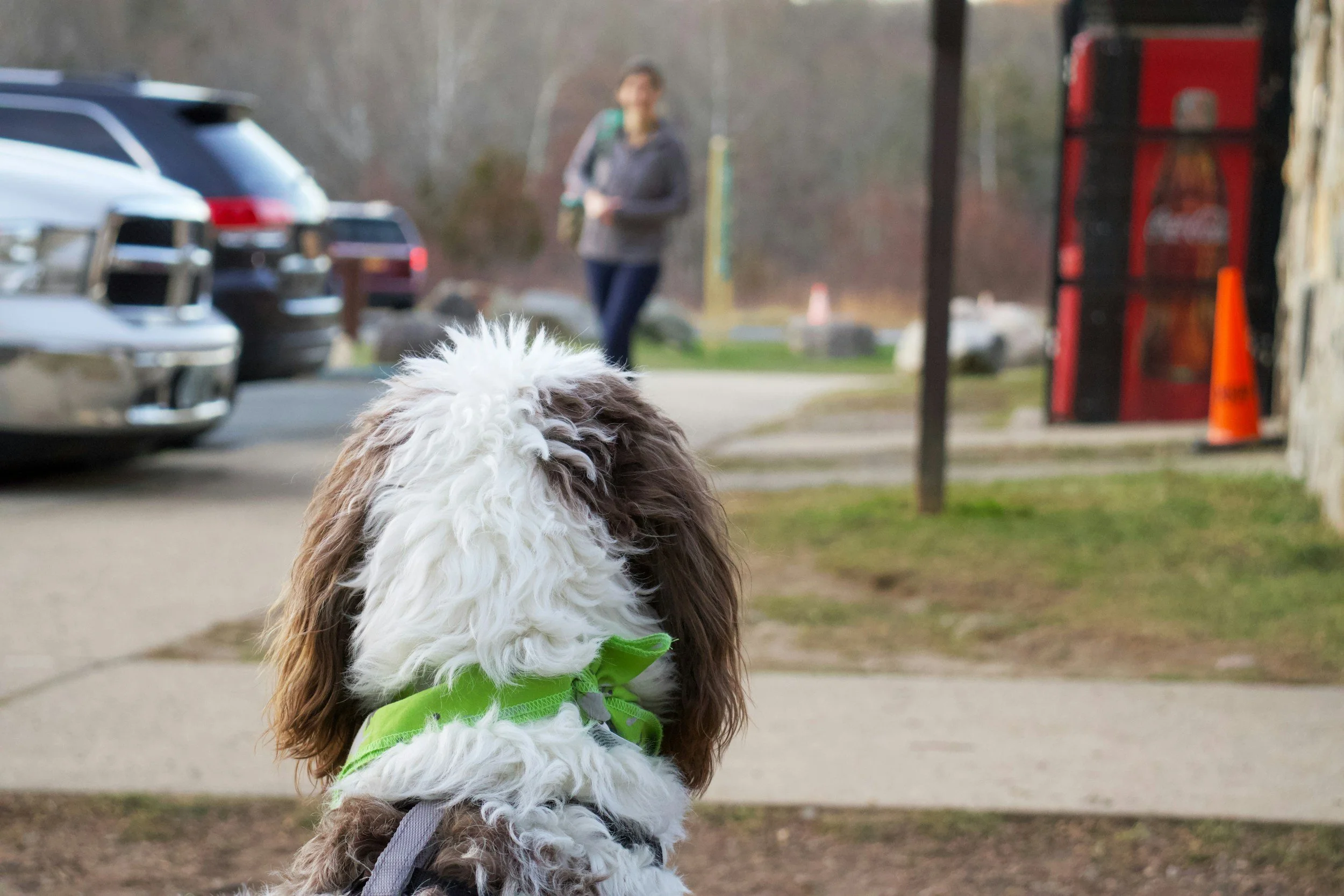
Having a great recall can save your dog’s life!
The Story That Says It All
Let me tell you why this matters so much.
I've had several clients learn the emergency recall and practice it faithfully at home, and then actually have to use it for real. One that I'll never forget: a client's dog slipped their leash and started heading straight toward traffic. The owner called the emergency recall, and the dog turned on a dime and came right back to them.
That dog is alive today because that family kept up the training at home. That's the stakes. Maintenance isn't busywork you do to please your trainer. It's the difference between a cue your dog kind of knows and a cue that can save their life.
My At-Home Maintenance Playbook
Here's what I tell my clients to do:
Sprinkle Sessions
You do not need to sit down for a grueling thirty-minute training block. I want you to sprinkle it in: five minutes here, five minutes there. During a commercial break. While the coffee's brewing. By the end of the day, you've easily totaled twenty to thirty minutes, and neither you nor your dog ever felt like it was a chore.
Get the Kids Involved
If you've got younger children, bring them into the training instead of working around them. A game I love: write the different cues on pieces of paper, fold them up, and toss them in a hat. The kids get to reach in and pick which cue we're working on next, right alongside the adults. Now training is a family activity, and your dog learns to listen to everyone.
Use Your Resources
My clients have access to my dog training video library, so they can always go back and refresh on exactly how something is done, along with printed handouts. Refer back to them often. There's no shame in checking your notes.
Climb the Ladder Gradually
I walk every client through the stages of training and how we slowly increase distance, duration, and distractions, never all at once, and never faster than the dog can handle. The goal is to continually set your dog up to succeed, not to test them before they're ready and continuously fail.
Train in Sets of Five
I use Jean Donaldson's push-drop-stick method to keep sessions honest and efficient. You work in sets of five reps. If your dog nails four or five, you push to the next level of difficulty. If they get three out of five, you stick and repeat that same step. If they get two or fewer, you drop back to the easier step. It takes the guesswork out of knowing when you're ready to make things harder.
The One Thing I Want You to Remember
If you take nothing else from this, take this: find ways to make training fun, for you and for your dog.
When training is something you genuinely enjoy doing together, you'll want to keep it up. It stops being one more thing to check off the to-do list and becomes part of how you and your dog hang out. That shift in mindset is, more than any single technique, what keeps training alive at home long after our work together is done.
Your dog is always learning. The only question is whether you're the one teaching them. Make it fun, keep it consistent, and sprinkle it into your days. You've got this!
Want more personalized expert guidance?
Keeping training alive at home looks a little different for every family, and sometimes it helps to have an experienced trainer look at your specific routine and your dog. I offer private training programs in Lynchburg, Amherst, and throughout Campbell, Bedford, Appomattox, and Nelson counties in Virginia. I'd love to help you and your pup build habits that actually stick long after our work together is done.
If you'd like to learn more about our training programs, complete the contact form on our website to schedule a quick call. We'll talk through your dog's unique challenges and how we can set you up to keep making progress at home. Let's work together to ensure a calmer, happier, well-trained dog!